
Connect with us

ENGLISH

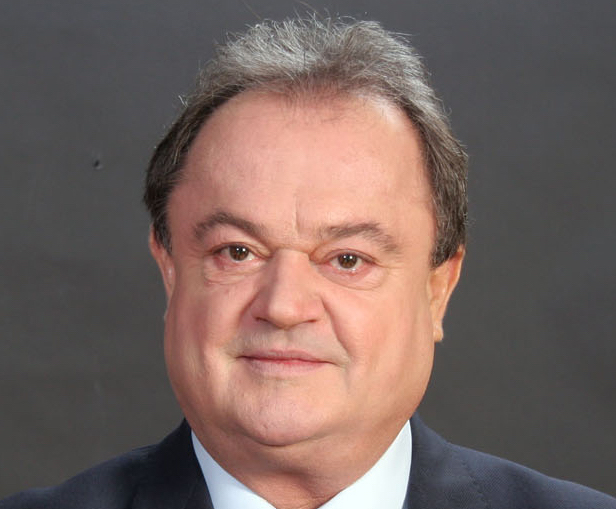
MEP Vasile Blaga: It’s vital that Romania continues to implement regional and local programmes through the EU cohesion package

Published

on

MEP Vasile Blaga (PNL, EPP) welcomes the positive vote of the Council of the European Union for the Cohesion Package 2021-2027 worth €330 billion, of which Romania will benefit from around €28 billion.

“The European Union’s main investment programme is cohesion policy. As far as Romania is concerned, the cohesion funds must continue to finance the development gaps between the older Member States and those that have integrated later. It is vital that Romania continues to implement regional and local programmes. At the same time, investments financed by the cohesion funds will to a large extent also ensure recovery from the pandemic, alongside the funds specifically earmarked through the NRDP”, said the NLP MEP for the news platform Calea Europeana.

According to MEP Vasile Blaga, “the two funding programmes must be complementary, both having sustainable objectives – from infrastructure funding to green transition and digitalisation projects”.

”The European Parliament will now vote on the Council’s position before it is published in the Official Journal of the European Union in June, most likely during the plenary session in Strasbourg”, added the EPP MEP.

The Council gave its final green light to the adoption of the cohesion package for the financial period 2021-2027.

The package is a set of regulations governing the structural and investment funds, which amount to more than €330 billion (in 2018 prices) or nearly one third of the EU’s long-term budget. The funds will finance regional and local projects designed to reduce economic and social disparities between member states and regions, while boosting a sustainable recovery from the pandemic by investing in green and digital priorities.


Diana Zaim este foto jurnalist, câștigătoare a Premiul Publicului la European Youth Event 2020, cel mai mare eveniment pentru tineri organizat de Parlamentul European. Absolventă a secției germană-portugheză în cadrul Universității din București, Diana urmează în prezent programul de master ”Relații Internaționale și Integrare Europeană” în cadrul SNSPA. Pasionată de promovarea valorilor europene, Diana este parte a comunității Model European Union, cea mai amplă simulare la nivel european a procesului decizional din cadrul Uniunii Europene.

ENGLISH

Gheorghe Falcă: The European Parliament is concluding the year with a full agenda; Romania has a direct interest in a strong EU

Published

on

© Gheorghe Falcă - Arhivă Personală

Romania has a direct interest in a European Union that is strong in defense, energy independent, fair to farmers, and firm against foreign interference and disinformation of any kind, emphasizes Member of the European Parliament Gheorghe Falcă.

He announced the main topics that he and his colleagues in the European Parliament will address during the final parliamentary session of this year.

“At the European Parliament in Strasbourg, we are concluding the year with a demanding agenda once again, including issues that directly concern Romania: defense, energy, agriculture, the economy, democracy, and the protection of citizens,” the MEP highlighted.

The topics outlined by Gheorghe Falcă include:

Defense: boosting investment in the defense sector and the “ReArm Europe” Plan. Joint debate on military mobility and “European Defence 2030: assessing needs.” On Wednesday: preparation of the European Council (18–19 December), with a focus on support for Ukraine, the transatlantic relationship, and strategic autonomy.

Energy: debate and vote on the gradual phase-out of gas imports from Russia and the monitoring of energy dependencies. In addition, discussions on the grids package and responses to rising energy prices through robust infrastructure.

Agriculture: vote on major amendments to the Common Agricultural Policy, a vote on the EU–Mercosur safeguard clause for agricultural products, objections concerning GM maize NK603 and GM sugar beet KWS20-1, as well as an objection regarding maximum residue limits for acetamiprid.

Economy and rules: votes on corporate sustainability reporting and due diligence, the Brexit Adjustment Reserve, and the Globalisation Adjustment Fund.

For the citizens: vote on the ADR Directive (consumer dispute resolution), debates on affordable housing, the automotive package, the EU plan for cardiovascular health, as well as Artificial Intelligence and algorithmic management in the workplace and the geopolitical impact on access to medicines.

Democracy and resilience: debate on the European Democracy Shield (algorithms, foreign interference, disinformation), cases of pro-Russian espionage in the European Parliament, a vote on the rule of law conditionality mechanism, as well as the situation in Georgia and Belarus’ hybrid attacks against Lithuania.

External affairs and human rights: Palestine/Lebanon, EU–Saudi Arabia relations, and the debate on attacks against humanitarian workers and journalists.

Continue Reading

ENGLISH

UNESCO Global Network of Learning Cities in Romania Conference: For two days, the city of Cugir was the epicenter of promoting lifelong learning and sustainable development

Published

on

© Primăria Cugir

On November 17-18, the city of Cugir hosted the UNESCO Global Network of Learning Cities in Romania Conference, becoming the epicenter of promoting lifelong learning and sustainable development.

Organized by the Cugir City Hall together with the Romanian National Commission for UNESCO, the event brought together representatives of local government, specialists in education, research, urban development, and public policy, as well as representatives of cities that are part of the UNESCO Global Network of Learning Cities.

During the two days, participants exchanged best practices in sustainable urban development and the promotion of lifelong learning.

The first day included dialogue sessions on cultural and educational projects that have changed the local communities where they were implemented, UNESCO’s role in sustainable urban development, transformative initiatives based on regional and cross-sectoral collaboration, heritage preservation projects, and projects that promote environmental protection.

In his opening remarks, mayor Adrian Ovidiu Teban, host of the conference, highlighted Cugir’s ability to adapt to new realities by capitalizing on its cultural and industrial heritage and implementing measures in areas such as intergenerational education, historical heritage, sustainable mobility, and industrial heritage.

Cugir is a small city in terms of population, but ambitious in terms of its aspirations. We want Cugir to transform from an industrial city into a sustainable city that capitalizes on its heritage and local resources in a sustainable way”, said mayor Adrian Ovidiu Teban.

© Primăria Cugir

In turn, Nicolae Moldovan, mayor of Beclean and first vice-president of the Association of Romanian Cities (AOR), highlighted the risk of self-sufficiency when it comes to urban development, while emphasizing the need for continuous learning and sharing of experiences and best practices between communities for sustainable development.

As long as we are willing to learn new things, the country can develop. I believe this is the secret of a developing administration“, emphasized Nicolae Moldovan, mayor of Beclean and first vice president of the AOR.

Ligia Deca, Secretary-General of Romania’s National Commission for UNESCO, presented UNESCO’s vision for the contemporary city, which brings well-being to its citizens “only if it learns continuously, if it capitalizes on its heritage, and if it manages to stimulate creativity when it gives culture and education a central role in sustainable development.”

In this context, the Secretary-General of Romania’s National Commission for UNESCO listed a series of strategic directions for learning cities: strengthening local educational ecosystems, promoting inclusion, and integrating heritage and creativity into urban development.

Cities are places where UNESCO’s global policies are transformed into real initiatives, from educational projects to cultural projects to community events. UNESCO cities in Romania are not only ready to be partners in the debate, but also to effectively implement what we decide is important for our communities”, said Ligia Deca, Secretary General of the Romanian National Commission for UNESCO.

Raul Valdes Cotera, Chief Program Coordinator at the UNESCO Institute for Lifelong Learning (UIL), highlighted the opportunities for dialogue between learning cities and creative cities, pointing out that social and environmental challenges can no longer be addressed through formal education alone, but require a complex approach centered on continuous three-dimensional training: formal, informal, and non-formal.

© Primăria Cugir

He presented the key stages of the UNESCO Global Network of Learning Cities – which currently comprises over 350 cities with a total population of 390 million people in nearly 80 countries – and emphasized the common priorities of learning cities and the positive impact of sharing best practices on communities.

Lifelong learning means more than just developing professional skills. It means ensuring that people of all ages have opportunities for formal, informal, and non-formal learning in classrooms, at work, at home, in communities, online, etc. When cities commit to this ambition, they empower citizens, strengthen social inclusion, stimulate economic development, and build a more sustainable future. So let us embrace lifelong learning not just as a concept, but as part of the culture we live every day in our cities, our institutions, and our communities”, Raul Valdes Cotera emphasized.

The Chief Program Coordinator at the UNESCO Institute for Lifelong Learning (UIL) also praised the inspiring work of the three learning cities that are part of this global network: Cugir, Galați and Reșița.

Their dedication to promoting lifelong learning at the local level truly reflects the spirit of UNESCO. They show how learning can strengthen communities, stimulate innovation, and drive sustainable development. I would also like to acknowledge the essential role of the Romanian National Commission for UNESCO, whose ongoing commitment has been instrumental in promoting lifelong learning throughout the country. My warmest congratulations to all of you for your leadership and commitment to making lifelong learning a driving force for a better and more inclusive future”, said Raul Valdes Cotera.

Geanina Edulescu, advisor to the Ministry of Education, presented the national and European legislative levers available to her institution to ensure lifelong learning for Romanian citizens and how these connect with the UNESCO initiative and the role of learning cities.

In her comprehensive presentation, Geanina Edulescu listed the key skills needed to adapt to a constantly changing world: literacy, multilingualism, digital skills, STEM (science, technology, engineering, and mathematics), civic skills, entrepreneurial skills, cultural skills, and learning to learn.

© Primăria Cugir

Lifelong learning is not a slogan, it is not a chapter in a law, and it is certainly not a European fad. Better-educated people create stronger communities and a resilient society, all of which translates into a competitive economy, which ultimately means profit”, said Geanina Edulescu, advisor to the Ministry of Education.

The panel ”UNESCO in Romania” highlighted the diversity and complexity of UNESCO heritage in Alba County, from the Dacian fortresses and Roman fortifications that make up the Dacian Limes to the cultural landscape of Roșia Montană.

There were presented examples of restoration, archaeological research, and site enhancement, as well as perspectives on their integration into the public circuit, through approaches that respect authenticity, historical context, and local specificity.

The panel also included a presentation dedicated to UNESCO Creative Cities, focusing on the recent example of Bistrița, designated a Creative City in the field of architecture.

© Primăria Cugir

The role of continuing education and non-formal training in the development of an urban heritage culture was discussed, especially in a context where historic centers are fragmented in terms of function and ownership.

During the panel discussion ”Presentations of good practices from participating cities”, the guests illustrated, through concrete examples, how the idea of a ”learning city” can be put into practice.

Simion Pop, from the George Coșbuc Municipal Cultural Center in Bistrița, spoke about the need to develop a culture of housing and heritage through programs dedicated to adults.

On behalf of the Iași City Hall, Adriana Spătaru presented the city’s journey as a member of the UNESCO network, through large-scale literary festivals, programs dedicated to writers and translators, as well as international collaborations that strengthen Iași’s cultural status.

Representatives from the cities of Durban (South Africa) and Cork (Ireland) brought the perspective of communities with a tradition of lifelong learning through festivals, networks of partnerships with universities, and initiatives that bring reading and continuing education into the public space.

© Primăria Cugir

The mayor of Ialoveni, Sergiu Armașu, presented educational inclusion projects for children with disabilities and digital literacy programs for the elderly, linked to the broader goal of European modernization.

Ildiko Pataki, from Reșița City Hall, spoke about ”Reșița Learns”, a sustainable revitalization process that combines infrastructure investments with the development of an integrated dual campus and teacher training programs.

© Primăria Cugir

On behalf of the hosts, Irina Mihăilă presented the “Just Streets” project, through which Cugir City Hall is working with citizens to give public space back to the people, promoting active mobility and a healthier city.

The second day of the conference was dedicated to civil society organizations, cultural institutions, environmental initiatives, and educational projects that directly contribute to the transformation of local communities.

The diversity of the actors and interventions presented highlighted how complex and dynamic the lifelong learning ecosystem in Romania is when local government, the non-governmental sector, and the cultural environment join forces.

Throughout the day, participants had the opportunity to discover a variety of projects that bring learning closer to people, in forms adapted to local contexts: cultural education programs through theater and visual arts, training activities in museums and themed camps dedicated to children and young people, community art projects, as well as collaborative initiatives that use culture as a tool for social cohesion.

Other organizations presented projects focused on environmental education, with an emphasis on the effects of climate change, the protection of natural heritage, or the development of interpretive activities in geoparks, illustrating how scientific knowledge can be translated into activities accessible to communities.

It was presented projects that integrate heritage education into practical activities—from architecture workshops for children to interventions for revitalizing historic or rural areas, carried out in collaboration with universities and international networks. International examples, such as the experience of the city of Cork and the Lifelong Learning Festival, demonstrated the enormous potential of intergenerational engagement and volunteering in strengthening community identity.

The discussions continued with presentations dedicated to inter-community collaboration, initiatives for developing cultural and educational networks, creating cultural hubs, and strengthening cooperation between member cities of the UNESCO network. The specific challenges facing mountain areas—from depopulation to accessibility—were also highlighted, along with the solutions that local projects can offer to revitalize them. The thematic panels highlighted the idea that community-level learning processes start with identifying real needs, continue with collaborative actions, and result in visible outcomes with a direct impact on people’s lives.

© Primăria Cugir

The day ended with a World Café, a participatory exercise in which representatives of local administrations, NGOs, cultural institutions, and the educational community worked together to outline the future development directions of the UNESCO Cities Network in Romania.

The open and collaborative atmosphere demonstrated once again that learning cities are not just a theoretical concept, but a living process, built through the constant contribution of people, institutions, and organizations that believe in the potential of their communities.

The event finished with a visit to the LOTUS Elderly Care and Recovery Center in Cugir, showing how investing in facilities for vulnerable groups helps build social solidarity.

© Primăria Cugir

Continue Reading

ENGLISH

Strengthening the EU single market is an “urgent need,” says BusinessEurope director (INTERVIEW): We believe in Europe’s inventions, but they don’t believe Europe is the best place to scale

Published

on

© Concordia

As Europe measures its strength in an increasingly tough global competition, and Romania seeks to consolidate its role as a strategic player in European policy-making, Markus Beyrer, Director General of BusinessEurope, says that “cannot afford to focus on just one area of priority” if the EU is to prosper on an equal footing with the US and China in terms of competitiveness.

In an interview with CaleaEuropeană.ro, Beyrer emphasizes that the European business community is ready to contribute directly to shaping decisions, but this requires a real partnership with policymakers.

“We always take a constructive approach, in which we not only identify challenges, but also offer concrete solutions,” he says.

Speaking about the EU’s competitiveness deficit vis-à-vis the US and China, he warns that current promises “are not enough,” given that regulatory costs for companies remain huge and investments are migrating to more dynamic markets. “In terms of the Single Market, that data clearly demonstrates the urgent need for it to be strengthened”, he adds.

At the same time, Beyrer welcomes the increasingly visible involvement of Romania and the countries of Central and Eastern Europe, where “viewpoints must always be heard and appreciated,” insisting that without coordinated action on investment, energy, the internal market, and reducing bureaucracy, Europe risks losing the “economic race,” as European leaders are increasingly recognizing.

CaleaEuropeană.ro: The “Smart Development, European Competitiveness” Summit, organised by the Concordia Employers’ Confederation, emphasised the partnership between the state and the private sector, including in the development of public policies. How does this dialogue function at the European level, and what best practices could Romania adopt so that the business community contributes more directly to shaping economic strategies?

Markus Beyrer: BusinessEurope engages at every level of the EU institutions to ensure that our message is heard, from technical discussions and providing input to consultations to participating in high-level formats such as the Tripartite Social Summit alongside the Commission and Council Presidents.

When we have these engagements, we always take a constructive approach whereby we not only raise challenges but also offer policy advice and concrete solutions. We also provide practical examples and scientific evidence (e.g. our study on energy costs) and make concrete proposals for improvements (e.g. our 68 proposals for simplification and burden reduction).

Moreover, trust and accountability are important. If policymakers receive a position from us hundreds of experts from all over Europe have been involved and contributed to it. So, policymakers can count on the fact that it is balanced and reflects the business community at large.

These are principles that are relevant not just at the EU level, but also for Member States like Romania.

CaleaEuropeană.ro: Concordia President Dan Șucu underlined that Romania must move “from an economic executor to a strategic leader” and take an active role in defining European policies. How can BusinessEurope support this transition, so that Central and Eastern European countries become more visible and influential in the debates on the Union’s competitiveness?

Markus Beyrer: For us, it is all about compromise. We focus on the bigger picture and develop positions that are cross sectorial and benefit Europe and business at large.

This is what makes our positions carry such weight: If we say that a position is a BusinessEurope position – it means that all of our members are on board and experts from various different sectors, regions and sizes have contributed to it.

We work closely with members such as Concordia to ensure that Central and Eastern European viewpoints are always heard and valued in this process.

CaleaEuropeană.ro: During the same event, Romanian President Nicușor Dan echoed the concerns of several European leaders who believe that Europe risks losing the “economic race” with the United States and China unless it accelerates reforms and simplification. Do you agree that the current decision-making pace within the European Union is too slow to withstand global competition?

Markus Beyrer: To safeguard the EU’s competitiveness and enable it to thrive on equal footing with the U.S. and China, the Commission must deliver on its promise to cut regulatory burdens on companies by 25% and by 35% for SMEs

In the last policy cycle, the way to go was to regulate without keeping in mind the effects it has on companies and competitiveness. We therefore welcome the fact that European institutions have started to recognise the extent of our competitiveness challenges. It is a result of us ringing the alarm bells for years and calling for a reboot in EU policy.  An indication of this shift are the Omnibuses. These proposals should simplify current regulatory proposals. However, promises and a few Omnibuses are not enough. The Commission’s current omnibuses aim to cut €8 billion in compliance costs – this is only 5% of the total annual cost of €150 billion for businesses (Eurostat). We must continue with long-term burden reduction efforts.

While the direction of travel is right, we now need to see concrete results for the companies on the ground. Additionally, we need at least two more years of fully fledge Omnibuses to come anywhere near of the burden reduction promised by the President of the European Commission.

While the speed of delivery is important, as companies need to finally feel some of this burden reduction, for us it is most important that we are finally moving in the right direction where policy makers understand more and more the challenges businesses face. Now it is important to ensure, that all policy makers throughout the legislative cycle – Commission, Council, European Parliament – understand this urgency and act with unity.  

CaleaEuropeană.ro: BusinessEurope called for a European industrial competitiveness strategy long before EU leaders began to focus on this topic. Where should Europe intervene as a priority: in investment, in strengthening the Single Market, or in cutting bureaucracy and simplifying regulation?

Markus Beyrer: The European economy is at a point right now where we quite frankly cannot afford to focus on just one area of priority. The need for enhancing our global advantage and ensuring competitiveness is so urgent, that we cannot afford to only turn one screw at a time right now. The truth is that the EU can and must make all of these matters a priority. Given the competitiveness gap with the U.S. and China, the EU must focus on the needs of businesses when legislating to attract investments and make sure that innovation happens in Europe. Over 80% of venture capital from EU investors flows to U.S. start-ups. We believe in Europe’s inventions, but they don’t believe Europe is the best place to scale them.

In terms of the Single Market, that data clearly demonstrates the urgent need for it to be strengthened. The IMF estimates that intra-EU barriers are equivalent to 110% tariff in services and 45% in goods. Intra-EU trade has stagnated at around 20% of EU GDP since 2007 vs. more than 70% of GDP for intra-U.S. trade.

And we have already discussed the crucial need to rapidly reduce the regulatory burden on businesses across the EU. Moreover, the EU must prioritise lowering energy prices: EU companies continue to face electricity prices that are 2-3 times higher than in the U.S., and natural gas prices that are 4-5 times higher.

On the reduction of energy costs, the Clean Industrial Deal falls short – especially in the short term. At the same time, most short-term measures (e.g. lower energy taxes, grid charges) are primarily in the hands of member states. In the longer-term, the further integration of European energy markets by developing, modernising and building more interconnectors and shared energy infrastructure will be key.

With the current situation, we need determined and swift action in all these areas.

CaleaEuropeană.ro: From a business perspective, there seems to be a growing need to reconcile climate ambitions with industrial competitiveness. How do you assess the current balance between environmental, social, and competitiveness objectives? Is it time for a “strategic reset” of Europe’s economic policies?

Markus Beyrer: While European businesses remain fully committed to climate neutrality by 2050, targets alone will not deliver the needed results. There must be incentives and a business case to invest in decarbonisation. The debate on the 2040 target must therefore focus on the key enabling conditions that will create this business case and make the EU’s climate ambition achievable.

Securing access to affordable energy, mobilising massive public investments, building the necessary infrastructures, and creating lead markets will be key. We also need a stable and technology-neutral regulatory environment that avoids overregulation and fosters innovation.

Moreover, European industry needs strong protection against carbon leakage until there is a level playing field. If CBAM proves not to be effective, the phase-out of ETS free allowances should be postponed until other appropriate instruments are found. Flexibility mechanisms, including high-quality international credits and certified removals, can also play a role in reducing costs and recognising sectoral differences.

CaleaEuropeană.ro: The Capital Markets Union has long been a recurring yet unfulfilled topic at European summits. Europe has capital but struggles to mobilise it efficiently. What needs to change in order to better stimulate private investment in innovation and technology?

Markus Beyrer: BusinessEurope urges the EU and the Member States to facilitate both private and public investments at an unprecedented level to regain the EU’s lost competitive edge and to finance the green and digital transitions. Finance needs to be available through a variety of channels and on reasonable terms. We need to facilitate the free flow of capital in the EU and to promote cross-border investment. Developing a Savings and Investments Union (SIU), which combines the Capital Markets Union (CMU) and the Banking Union, should help to increase the availability of finance but the main goal should be to make the EU more attractive to both foreign and domestic investors.

Continue Reading

Facebook

Concrete & Design Solutions

Concrete-Design-Solutions

INCAS - Institutul Național de Cercetare-Dezvoltare Aerospațială „Elie Carafoli”

INTERNAȚIONAL1 hour ago

Donald Trump spune că „este timpul pentru o nouă conducere în Iran”, în contextul reprimării violente a protestelor: Ayatollahul Khamenei este responsabil pentru „distrugerea completă a țării”

INTERNAȚIONAL2 hours ago

Ministrul groenlandez al resurselor minerale salută reacția țărilor europene în fața tarifelor impuse de Trump: „Trăim vremuri extraordinare, care necesită nu numai demnitate, ci și mult curaj”

ROMÂNIA2 hours ago

Oficial: Nicușor Dan a primit o scrisoare de la Donald Trump prin care România este invitată să devină membru al Consiliului pentru Pace în Gaza

NATO3 hours ago

Ministrul Oana Țoiu a prezentat prioritățile României în perspectiva summitului NATO de la Ankara: consolidarea posturii NATO pe Flancul Estic, progrese în alocarea fondurilor pentru apărare și continuarea sprijinului pentru Ucraina

SUA13 hours ago

UE continuă riposta la tarifele lui Trump: Acordul comercial UE-SUA va fi “pus pe pauză”/ “China și Rusia trebuie să se bucure din plin, beneficiind de diviziunile dintre aliați”

SUA14 hours ago

“Nu ne vom lăsa șantajați și intimidați”: Europenii ripostează la tarifele lui Trump și promit un răspuns unit, inclusiv asigurarea securității arctice și în Groenlanda

U.E.18 hours ago

“Bine ați venit în cea mai mare piață din lume”: În debutul epocii jocului de sumă zero între superputeri, UE și Mercosur au semnat, la Asuncion, acordul celei mai mari zone de liber-schimb

INTERNAȚIONAL19 hours ago

Trump impune tarife Danemarcei, Norvegiei, Suediei, Franței, Germaniei, Regatului Unit, Țărilor de Jos și Finlandei pentru a forța “achiziția” Groenlandei: Pacea mondială este în joc!

ONU20 hours ago

A intrat în vigoare tratatul ONU ce oferă un cadru pentru guvernanța comună a aproximativ două treimi din suprafața oceanelor. Emmanuel Macron: Marea liberă nu va mai fi un Vest Sălbatic

ROMÂNIA22 hours ago

Autoritatea Națională pentru Cercetare: Proiecte de cercetare de peste 12 miliarde de lei contractate în ultimii trei ani din fonduri structurale, PNRR și fonduri naționale pentru competitivitatea europeană și națională

COMISIA EUROPEANA1 day ago

Președinții Braziliei și Comisiei Europene au sărbătorit acordul comercial UE-Mercosur. Ursula von der Leyen: Bine ați venit în cea mai mare zonă de liber schimb de pe planetă

ROMÂNIA4 weeks ago

Oana Țoiu: România și R. Moldova au cel mai puternic parteneriat diplomatic. Interesele țărilor noastre nu sunt doar aliniate, ci îndeplinite cu succes atâta timp cât le urmărim împreună

SUA4 weeks ago

Rubio: SUA nu încearcă să impună un acord de pace între Ucraina și Rusia, ci să înțeleagă ce este dispusă fiecare parte să accepte și să ofere pentru a ajunge la o soluție negociată

COMISIA EUROPEANA2 months ago

Comisia Europeană prezintă două soluții pentru a sprijini nevoile de finanțare ale Ucrainei în perioada 2026-2027: împrumuturi UE și utilizarea activelor rusești înghețate pentru un împrumut pentru reparații

ROMÂNIA2 months ago

Industria de apărare din România face apel la un cadru legislativ modern, predictibil și capabil să susțină producția locală, lanțurile de furnizori și transferul de tehnologie

BANCA EUROPEANĂ DE INVESTIȚII2 months ago

Șeful Biroului Grupului BEI în România prezintă instrumentele de finanțare ale Băncii Europene de Investiții pentru sectorul securității și apărării: Ambițiile noastre în acest domeniu s-au mărit considerabil

ROMÂNIA2 months ago

MAI câștigă o poziție de top în cadrul Frontex. Cătălin Predoiu: Este un succes important, obținut în condiții de concurență acerbă între țările europene

ROMÂNIA2 months ago

Președintele Senatului, în cadrul Summitului Parlamentar al Platformei Crimeea: Susținem independența, suveranitatea și integritatea teritorială a Ucrainei în cadrul granițelor recunoscute la nivel internațional

ROMÂNIA2 months ago

România nu mai vrea să fie un actor reactiv în dezbaterile europene, ci un contributor direct cu viziune proprie la definirea noului Cadru Financiar Multianual, spune Dragoș Pîslaru la lansarea „Procesului de la București”

COMISIA EUROPEANA2 months ago

Roxana Mînzatu, apel ferm ca dimensiunea socială să nu fie marginalizată în viitorul buget al UE: Trebuie să arătăm oamenilor că nu lăsăm ca nevoile lor să fie transformate în arme împotriva proiectului european

Trending