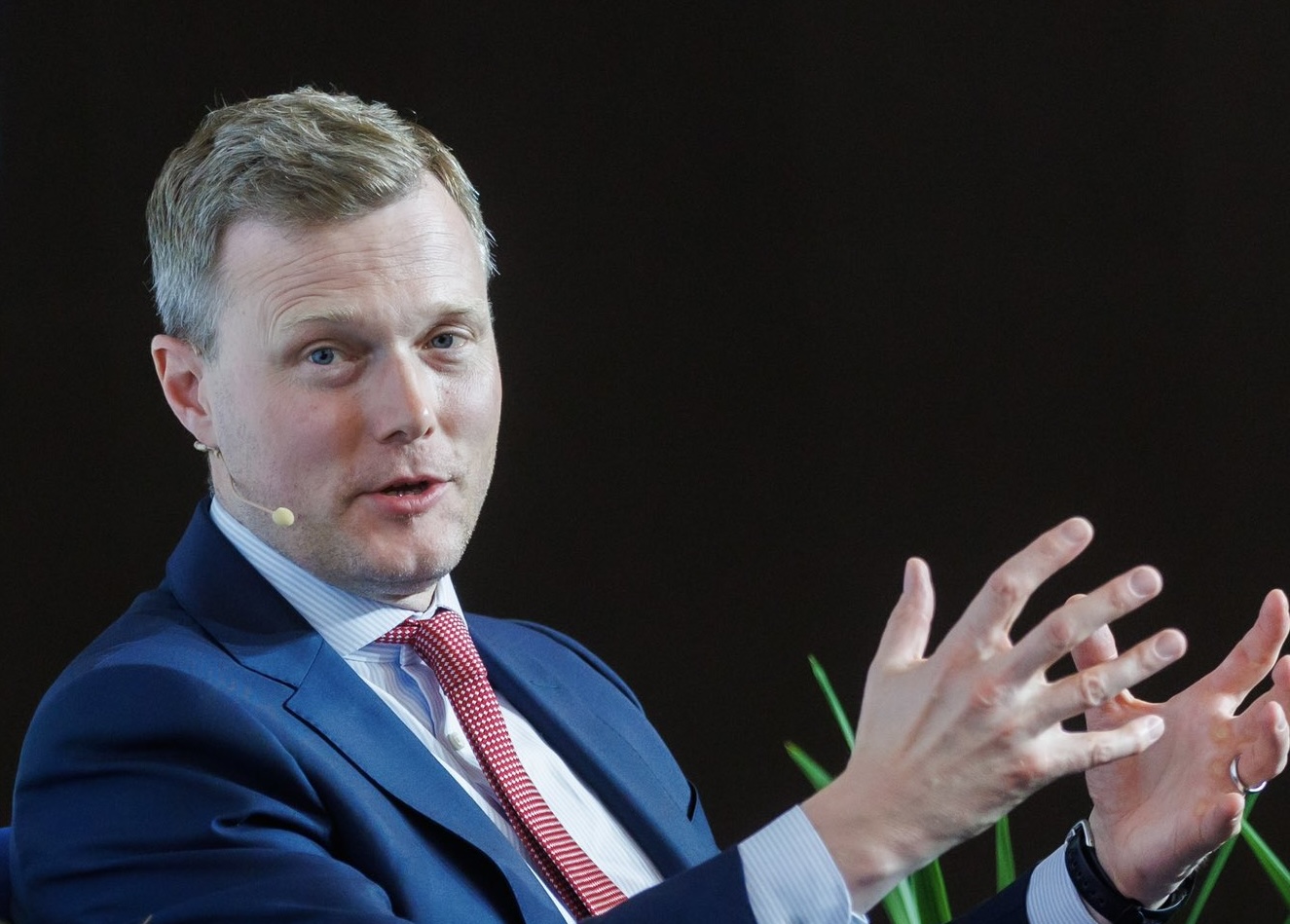
Romania, as an important US ally and major player on the Eastern flank, should learn from other transatlantic players and leaders and “build a bond” with US President Donald Trump, says Matthew Kroenig from the Atlantic Council, in an exclusive interview granted to CaleaEuropeană.ro.
Vice President of the Atlantic Council, Kroenig spoke to CaleaEuropeană.ro after President’s Nicușor Dan blitz visit to Washington and emphasised that Romania and the US “have the foundation for a good bilateral relationship”.
He considers that the comments made by Vice President Vance in Munich last year – “Romania cancelling elections as an example of European countries getting away from their democratic roots” – it’s not quite fair.

From Kroenig’s perspective, the trip of President Dan to the US to take part at the inaugural meeting of the Board of Peace shows that the US – Romania “relationship remains strong”.
Asked how Romania should leverage high-level political engagement with the US, Matthew Kroenig pointed out that President Trump “does value personal relationships even more than a traditional president”, offering as examples his relationships with NATO Secretary General Mark Rutte and with Finnish President Alexander Stubb.
“I think being able to build that personal relationship with Trump can transcend a lot of policy differences”, he explained, citing the security dimension and the economic and energy one as fields of further cooperation between Bucharest and Washington.
From the security point of view, Matthew Kroenig considers that Romania should continue to deliver on the allied burden sharing because President Trump sees it “as one of his major foreign policy wins of the first year”, namely the NATO Summit pledge to boost defence spending up to 5% of GDP.
On the economy and energy, the Vice President of the Atlantic Council explained that Trump pays attention to the economics and trade more than traditional presidents do because he is a “businessman”, while sweeping Biden’s administration priority on climate change with energy dominance plan.
“The economic and the energy issues are also going to be priorities for him”, he added.
On a wider perspective, namely EU-US relations, the Atlantic Council representative displayed confidence that the narrative of Europe’s civilizational erasure that was put down in the US National Security Strategy “is more at the level of rhetoric than action”.
The ideology filter that the Trump administration is projecting towards Europe is not unusual, according to Kroenig, with him pointing out that “American presidents have often found ideological allies in Europe”.
“I think the United States benefits from a strong and unified Europe, and that’s what the Trump administration is trying to do. I don’t think that they’re looking to fragment Europe along these ideological lines. I think there’s sincerely held beliefs by some people in the Trump administration that Europe is making mistakes, and European countries are going in the wrong direction”, the Atlantic Council VP said further.
Kroenig acknowledged that there is a possibility of the United States to have to deal with a two-tier strategic competition, a big one with China and threats to the European security posed by Russia, and argued that this can be part of the reason why NATO allies should do “most of what’s needed for conventional defense of Europe”.
At the same time, according to Kroenig, the United States continues “to provide critical but limited conventional support and nuclear deterrence” to Europe, while the main focus needs to be in the Indo-Pacific, “because China is more capable than Russia, and our allies in Asia are less numerous and less capable than our allies in Europe”.
Atlantic Council’s VP stressed that “Europe has an important role to play in the U.S.-China rivalry” because “it’s about the future of the global order”, adding economy, technology and values as part of the competition, not only a military one.
“Romania and European allies have an essential role to play when it comes to the technology competition, when it comes to the economic relationship. (…) Since this is a comprehensive competition and Europe is an economic and technology superpower, Europe’s role is going to be critical for those elements of the competition”, he concluded.